
-
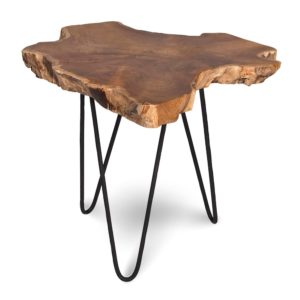
Style In Form Nesting Table Hairpin
Original price was: $429.00.$349.00Current price is: $349.00. -
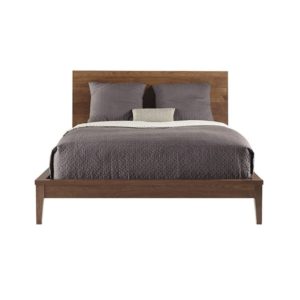
West Bros Serra King Walnut Bed
Original price was: $3,499.00.$2,799.00Current price is: $2,799.00. -
TH Definity Walnut Night Table
Original price was: $1,499.00.$1,199.00Current price is: $1,199.00. -
Ren-Wil Tupper Picture
Original price was: $549.00.$399.00Current price is: $399.00. -
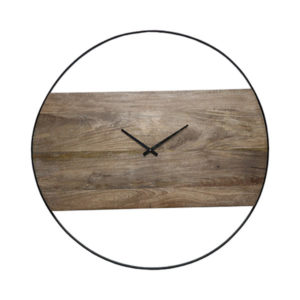
Renwil Amika Clock
Original price was: $619.00.$489.00Current price is: $489.00. -
Torre & Tagus Flame Sculpture
Original price was: $159.00.$119.00Current price is: $119.00. -
Citak 5X8 Rug Arctic Thatch
Original price was: $599.00.$449.00Current price is: $449.00.


What Is the Best Gramophone Record Player in 2026?
Choosing the best Gramophone Record Player in 2026 is not simply a matter of finding the most expensive model. The right choice depends on how you listen, what equipment you already own, and how much setup you are willing to do. A turntable should track steadily, keep unwanted vibration low, and make everyday use feel straightforward. Small details matter: a stable platter, a properly aligned cartridge, and a dust cover that does not feel flimsy.
Vinyl remains a substantial part of the recorded-music market. The Recording Industry Association of America’s 2023 Year-End Music Industry Revenue Report recorded about 43 million vinyl album shipments in the United States, with revenues of roughly $1.4 billion. Those figures do not prove that vinyl sounds better, but they show why buyers still compare turntables carefully. Michael Fremer, a longtime analog-audio journalist, has often emphasized a practical point: careful setup is essential to getting good performance from a turntable. That matters.
This guide compares models by sound, build quality, ease of use, and overall value, rather than by price or nostalgia alone. It considers both beginners who want a simple setup and experienced listeners who prefer adjustable components. No ranking is perfect; room acoustics, records, and expectations can change the result. I may give too much weight to usability. Still, a player that is hard to set up can spend more time on a shelf than beside the speakers.
What a Gramophone Record Player Is and How It Works
What Is the Best Gramophone Record Player in 2026?
What a Gramophone Record Player Is and How It Works
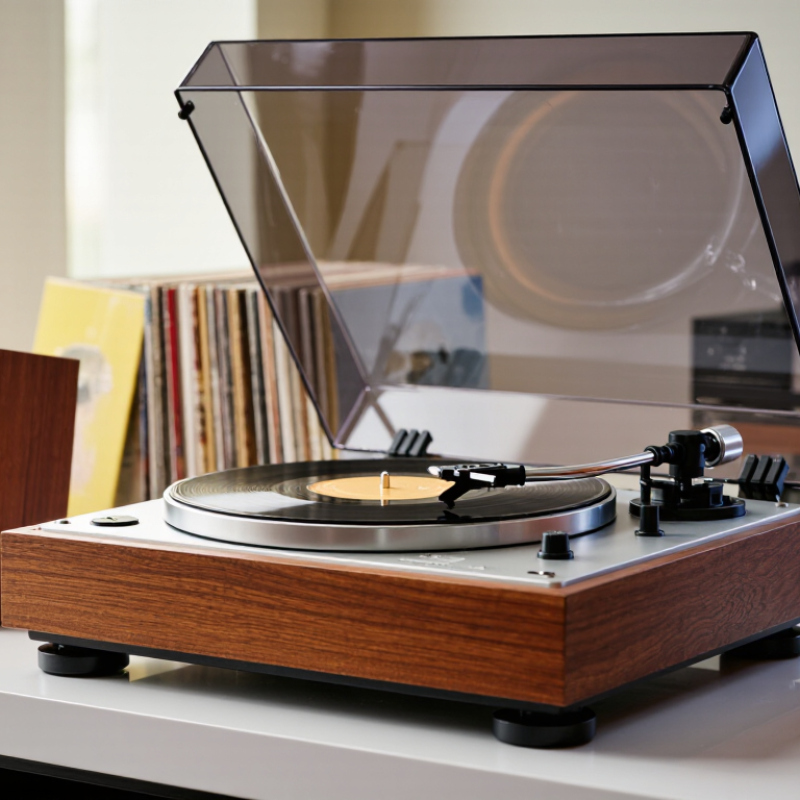
A gramophone record player turns tiny grooves in a disc into sound. As the record spins, a stylus rests in the groove and follows its changing shape. Those movements create vibrations. In a modern player, a cartridge converts the vibrations into an electrical signal, which passes through suitable amplification before reaching speakers. It is mechanical, then electrical, then audible.
Older acoustic gramophones work differently. Their stylus transfers vibrations to a diaphragm, and a horn helps project the sound into the room. No electronic amplifier is required. The term “gramophone” is sometimes used loosely for modern turntables, though the mechanisms are not always the same. That distinction can be easy to miss.
Playback depends on more than the player itself. The disc must sit flat, the stylus must be clean, and tracking force should match the cartridge’s guidance. A dusty needle can make quiet passages sound rough; a poorly balanced tonearm may cause uneven wear. The details matter. Even with careful setup, records can carry surface noise, and not every pressing sounds equally clear. That can be part of the experience, though it is worth admitting that warmth and fidelity are not the same thing.
| Topic | How It Works | Key Facts | What to Consider |
|---|---|---|---|
| Basic definition | A record player rotates a grooved disc while a stylus follows its groove. The stylus’s movement is converted into an audio signal or, in a purely acoustic gramophone, into sound through a mechanical diaphragm and horn. | “Gramophone” commonly refers to a record-playing device; traditional acoustic models do not require electronic amplification. | Decide whether you want a historical, horn-amplified instrument or a modern electronic turntable for everyday listening. |
| Platter and rotation | A motor turns the platter at a selected, steady speed. The record sits on the platter as the stylus traces its spiral groove. | Common record speeds are 33⅓, 45, and 78 revolutions per minute (RPM). The required speed depends on the record. | Check that the player supports the speeds and record formats in your collection. Many modern players do not support 78 RPM by default. |
| Stylus and groove | The stylus, also called the needle, rides in the groove. Groove variations move the stylus and transmit the recorded pattern to the cartridge or acoustic soundbox. | Most modern LP and 45 RPM records use a finer groove than many shellac 78 RPM records. | Use a stylus intended for the record type. A suitable 78 RPM stylus is generally larger than a microgroove stylus. |
| Cartridge and signal | On an electronic player, the cartridge converts stylus motion into an electrical signal. Moving-magnet and moving-coil are two common cartridge designs. | A cartridge’s output is typically a low-level phono signal, which needs appropriate amplification and equalization before it can drive ordinary speakers. | Confirm cartridge compatibility and whether the system includes a phono preamplifier or needs an external one. |
| Phono preamplifier | A phono preamplifier raises the cartridge signal to a usable level and applies playback equalization that reverses the standardized recording curve. | Some players have a built-in preamplifier; others require a separate phono input or external preamplifier. | Match the player’s output to the amplifier or powered speakers. Do not connect a phono-level output to a line-level input without suitable phono amplification. |
| Belt drive | A motor turns the platter through an elastic belt, which helps isolate the platter from some motor vibration. | Belt-driven designs are common in home listening systems. Belts can stretch or wear and may eventually need replacement. | Consider speed stability, ease of speed selection, and availability of a suitable replacement belt. |
| Direct drive | The motor drives the platter directly, without a separate belt. | Direct-drive designs can offer quick start-up and consistent speed; performance depends on the specific motor and control system. | Useful when quick start and robust operation matter. Compare measured speed stability and vibration rather than relying on drive type alone. |
| Acoustic wind-up gramophone | A wound spring powers the turntable. The stylus moves a diaphragm, and a horn amplifies the sound acoustically. | It operates without an electronic cartridge, phono preamplifier, or powered speaker, but its sound and volume differ from modern hi-fi playback. | For historical records, verify the correct speed and use an appropriate, replaceable needle. Avoid assuming every old record is safe to play on every acoustic machine. |
| Choosing a suitable player in 2026 | The best fit depends on the records, listening setup, and features required rather than on a single universal model. | Useful comparison points include supported speeds, cartridge and stylus compatibility, speed stability, vibration control, connection options, and repairability. | For a first system, prioritize correct record-speed support and a clear path to amplification. For shellac 78s, confirm both 78 RPM capability and a suitable 78 stylus. |