
-
Style In Form Nesting Table Hairpin
Original price was: $429.00.$349.00Current price is: $349.00. -
West Bros Serra King Walnut Bed
Original price was: $3,499.00.$2,799.00Current price is: $2,799.00. -
TH Definity Walnut Night Table
Original price was: $1,499.00.$1,199.00Current price is: $1,199.00. -
Ren-Wil Tupper Picture
Original price was: $549.00.$399.00Current price is: $399.00. -
Renwil Amika Clock
Original price was: $619.00.$489.00Current price is: $489.00. -
Torre & Tagus Flame Sculpture
Original price was: $159.00.$119.00Current price is: $119.00. -
Citak 5X8 Rug Arctic Thatch
Original price was: $599.00.$449.00Current price is: $449.00.
What Are the Best Yoga Tops for 2026?
What makes a yoga top worth wearing in 2026? The answer is not simply a soft fabric or a flattering cut. A useful top should stay comfortable through downward dog, feel secure during transitions, and avoid distracting seams or shifting straps. Small details matter. So does fit.
The Global Wellness Institute’s 2024 Global Wellness Economy Monitor valued the worldwide wellness economy at $6.3 trillion in 2023 and projected $7.3 trillion by 2028. This is not a yoga-apparel sales figure; it is broader context for the growing attention people give to wellbeing. For practical guidance, exercise physiologist Dr. Stacy Sims’s reminder, “Women are not small men,” offers a useful lens on fit and individual needs. It is not a garment-testing rule, but it cautions against assuming one design works for every body.
This guide compares Yoga Tops by support, coverage, fabric feel, breathability, and movement. It also considers how different cuts perform in slow classes, heated rooms, and more dynamic flows. A racerback may feel steady, while a loose tank can bunch when inverted. Honestly, no fabric solves every practice. The best choice depends on your body, your routine, and what you find comfortable after an hour of movement.
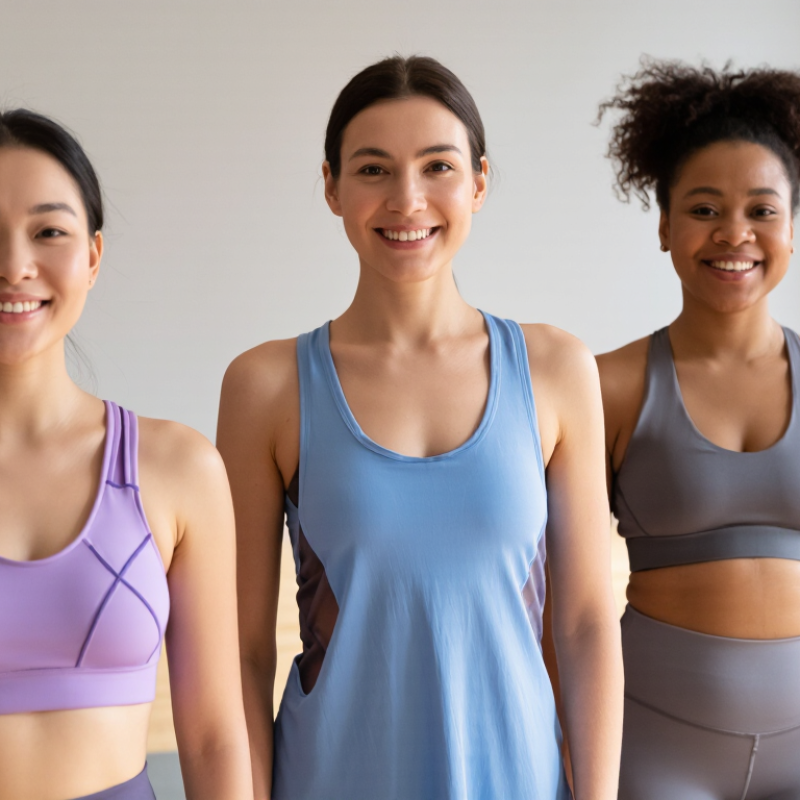
How Yoga Tops Are Defined and Evaluated in 2026
In 2026, a yoga top is best defined by how it supports movement, comfort, and coverage—not by its cut alone. It may be a fitted tank, a cropped layer, or a light long-sleeve shirt. The right choice depends on practice, room temperature, and personal preference. Simple enough.
Evaluate a top with repeatable checks: reach overhead, fold forward, and hold a down-dog position. Notice whether the hem rides up, straps dig in, or stretched fabric becomes sheer. Check seams against your skin, and see whether sweat dries at a comfortable pace. Softness matters, but it does not prove durability. Washing can change fit, so post-wash shape belongs in the assessment. For a fair comparison, use similar movements and record support, ventilation, and adjustments. Compression is not ideal for everyone. A review should describe who tested the top and under what conditions. Even then, one rating may miss how differently bodies move.
Tips: Try the top in the size you would actually wear. Lift your arms, twist, and bend near a mirror. Check coverage in bright light, too. Small details matter. They are easy to overlook.
| Top Type | How It Is Defined | Typical Support | Coverage and Fit | Useful Fabric Features | Best Suited To | What to Check Before Buying |
|---|---|---|---|---|---|---|
| Light-support tank | A sleeveless, close-fitting or relaxed top without substantial built-in bust support. | Low; support generally comes from the wearer’s separate sports bra, if needed. | Armholes and neckline vary; longer cuts can provide more coverage during bends and stretches. | Soft, breathable knits; moisture-wicking finishes may help move sweat away from the skin. | Gentle yoga, restorative practice, warm weather, or layering over a bra. | Check armhole coverage, fabric opacity when stretched, and whether the hem stays in place in forward folds. |
| Built-in-bra tank | A tank top with an integrated inner shelf or bra layer; some designs include removable pads. | Usually light to moderate; actual support depends on construction, sizing, and personal fit. | Often offers a streamlined fit. An inner layer may feel snugger than the outer fabric. | Stretch fabric with a supportive inner band; removable pads are a matter of preference. | Low-impact classes and people who prefer an all-in-one garment. | Check the support band, pad placement, inner-layer comfort, and whether the sizing accommodates both torso and bust. |
| Compression crop top | A short, close-fitting top designed to reduce fabric movement and provide a held-in feel. | Varies from light to firm; a crop top is not automatically a high-support sports bra. | Shorter hem offers less torso coverage; compression should feel secure without restricting breathing or movement. | Stretch blends with recovery can help the garment return to shape after wear. | Dynamic flows when a close fit is preferred, especially when worn with high-rise bottoms. | Test comfort during deep breathing, twists, and overhead reaches; check that seams do not dig in. |
| Longline bra top | A bra-style top with a longer band extending farther down the torso than a conventional short sports bra. | Depends on the bra construction; support may range from light to firm. | Provides more torso coverage than a short bra top, though it may still leave the midriff exposed. | A stable underband and stretch fabric help maintain a close fit; lining can improve coverage. | Warm studios or practice where a bra-style top and extended band are comfortable. | Check band stability, neckline coverage in inversions, and whether the garment is intended to be worn as a standalone top. |
| Relaxed-fit yoga tee | A short- or long-sleeved T-shirt cut with more ease through the body than a fitted tank. | None unless a separate supportive layer is worn. | Offers fuller torso and shoulder coverage; excess fabric may shift during inverted poses. | Lightweight, breathable fabric can improve comfort; cotton absorbs moisture but may stay damp longer than many synthetic performance fabrics. | Gentle practice, cooler conditions, or people who prefer looser coverage. | Check sleeve and hem movement during downward-facing positions, and choose a length that does not bunch uncomfortably. |
| Long-sleeve performance top | A fitted or semi-fitted top with sleeves covering most or all of the arms. | Usually none; support is generally provided by a separate bra. | Offers more arm coverage and can be layered; fitted sleeves are less likely to shift during movement. | Lightweight stretch knits support mobility; quick-drying fabrics can be useful during sweatier sessions. | Cooler rooms, outdoor practice, or added arm coverage. | Check shoulder mobility, sleeve length, and whether the fabric remains comfortable when warm. |
| Wrap or crossover top | A top with overlapping front panels or a wrap-style neckline, sometimes secured with ties or an internal layer. | Varies; overlapping fabric alone does not guarantee bust support. | Can allow adjustable coverage, but the neckline may shift during forward bends or inversions. | Soft stretch fabric helps the panels move with the body; secure closures can improve stability. | Gentle practice and people who want an adjustable or layered look. | Check that panels stay closed during movement and that ties or closures do not press uncomfortably against the body. |
| Evaluation guide: Compare tops by support needs, coverage, range of motion, comfort, opacity when stretched, seam placement, fabric breathability, moisture management, and care instructions. Support levels and fit vary by design and individual body shape; try movements such as reaching overhead, twisting, and folding forward when assessing a top. Fabric descriptions such as “moisture-wicking” depend on the material and finish and do not guarantee a particular performance result. | ||||||