How to Choose the Best Selectorized Machine for Your Gym?
Choosing the right Selectorized Machine is not about filling every corner with equipment. It is about matching the machines to your members, floor space, and training goals. Arthur Jones, the Nautilus founder and a pioneer of selectorized exercise equipment, is widely associated with this training principle: “You can train hard or you can train long, but you can’t do both.” His work helped shape modern machine-based strength training, though that line alone cannot decide which model belongs in your gym.
Start with the people who will use the equipment. A busy community gym may need durable, easy-to-adjust machines with clear instructions and accessible weight stacks. A smaller studio might favor compact models that support several training needs. Check the seat and pad adjustments, range of motion, stack increments, cable feel, and service access. Ask whether members can reach the controls without awkward stretching. Small details matter.
Then test the machines in person. A smooth first repetition is useful, but it does not prove long-term comfort or reliability. Compare warranties, replacement-part availability, and the supplier’s service record. Measure delivery routes, too. A machine that fits the floor plan may not fit through the doorway. That happens.
There is no perfect lineup. Some choices may need revision after members use the equipment. Track what gets used, what causes discomfort, and what sits idle. Those observations can reveal more than a polished brochure.
Set Training Goals Using ACSM’s 2–3-Day Weekly Strength-Training Guidance
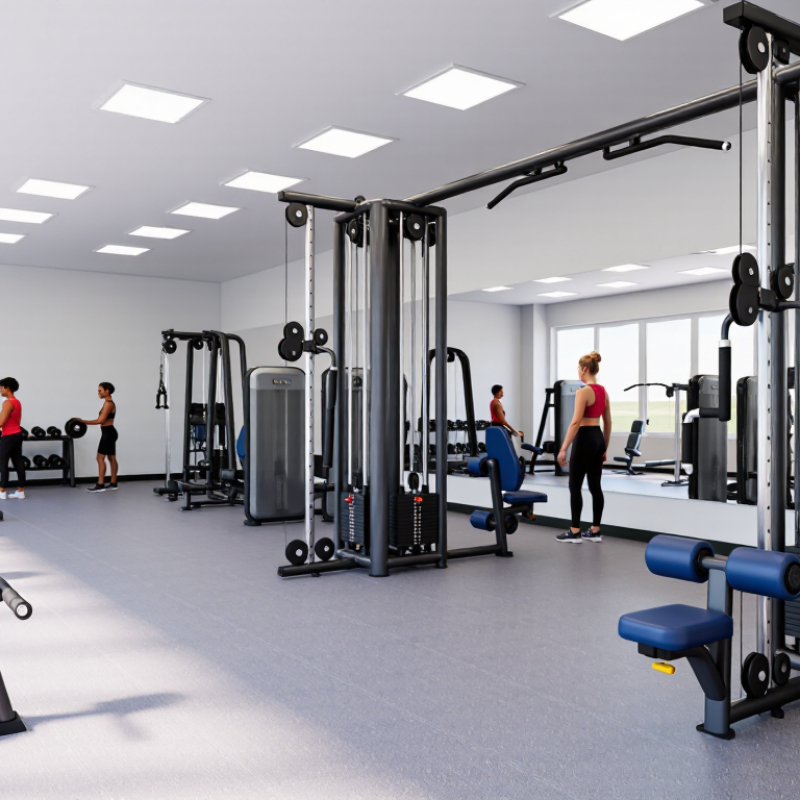
ACSM guidance recommends strength training two to three days per week, giving gyms a practical starting point for equipment planning. Build schedules around major muscle groups, with rest between hard sessions. A selectorized chest press, row, leg press, and leg curl can help beginners learn controlled movements without handling loose weights. Keep goals concrete: for example, complete two weekly sessions and gradually increase repetitions or resistance while maintaining good form. ACSM’s 2024 Worldwide Survey of Fitness Trends gathered responses from more than 2,000 fitness professionals across 80 countries. It provides useful industry context, but it does not prove that one machine type works best for every member.
Choose machines that fit the people using them. Check seat adjustments, clear weight-stack markings, smooth movement, and whether the machine suits different body sizes. Allow enough room for safe entry and exit. A neat equipment list can still fail if members cannot adjust the machines quickly. That detail is easy to miss.
Tips: Map each machine to a weekly training plan before purchasing. Test adjustments with users of different heights, and record how long setup takes. Start with two sessions. Review attendance and progression after several weeks; plans that look tidy on paper may need revision in a busy gym.
Match Muscle-Group Coverage to ACSM’s 8–10-Exercise Framework
How to Choose the Best Selectorized Machine for Your Gym?
Match Muscle-Group Coverage to ACSM’s 8–10-Exercise Framework
A useful selectorized-machine lineup should cover the major muscle groups, not just the most popular exercises. ACSM’s 8–10-exercise framework offers a practical planning guide for a full-body resistance session. Think chest, back, shoulders, arms, hips, legs, and trunk. Machines can make setup straightforward, especially when users can adjust seats and pads without guesswork. Fit matters. A machine that feels awkward may sit unused, even if its exercise list looks complete.
Map each planned exercise to a movement pattern, then check for gaps. A chest press and seated row cover pushing and pulling, while a leg press and leg curl train different lower-body actions. Add options for shoulders, arms, and trunk as space allows. Avoid buying several machines that repeat nearly identical movements. I’ve seen tidy layouts miss hip work; it is an easy oversight. The framework guides selection, but it does not require one machine per muscle group.
Tips: Test adjustments with different users before purchase. Check the starting position, range of motion, and weight increments. Leave enough floor space for safe entry and exit. Reassess the lineup after observing how members actually use it. That feedback may challenge your original plan.
How to Choose the Best Selectorized Machine for Your Gym? — Match Muscle-Group Coverage to ACSM’s 8–10-Exercise Framework
| # | Exercise Station | Primary Muscle Groups | Coverage Role | Selection Checks |
| 1 | Chest Press | Pectoralis major; triceps and anterior deltoids assist | Horizontal pushing for the chest and arms | Look for adjustable seat height and handles that allow a comfortable range of motion. |
| 2 | Seated Row | Middle back muscles, including the rhomboids and middle trapezius; latissimus dorsi and biceps assist | Horizontal pulling to balance pressing movements | Check that the chest or torso support and handle position suit the intended users. |
| 3 | Lat Pulldown | Latissimus dorsi; biceps and other upper-back muscles assist | Vertical pulling for the back and arms | Confirm that the thigh restraint adjusts securely and the cable path moves smoothly. |
| 4 | Shoulder Press | Deltoids; triceps assist | Overhead pushing for the shoulders and arms | Prioritize adjustable seat and starting position; ensure users can reach the handles without discomfort. |
| 5 | Leg Press | Quadriceps and gluteal muscles; hamstrings assist | Compound lower-body pushing | Check the platform, range-of-motion stops, seat adjustment, and rated load for the expected users. |
| 6 | Leg Extension | Quadriceps | Direct knee-extension work | Ensure the pivot and pad positions can be aligned comfortably with the user’s knee and lower leg. |
| 7 | Seated Leg Curl | Hamstrings | Direct knee-flexion work to complement lower-body pushing | Look for adjustable thigh and lower-leg pads and a comfortable seated setup. |
| 8 | Calf Raise | Gastrocnemius and soleus | Focused lower-leg work | Check for a stable foot platform and enough ankle range of motion for the intended exercise. |
| 9 | Abdominal Crunch | Rectus abdominis; obliques may contribute | Trunk flexion and abdominal-muscle training | Choose a design with clear setup instructions and resistance that can be adjusted in small increments. |
| 10 | Back Extension | Spinal erector muscles; gluteal and hamstring muscles may assist | Trunk and posterior-chain extension | Check that the support pads adjust to different body sizes and that the movement can be controlled. |
Planning note: ACSM resistance-training guidance commonly uses 8–10 exercises that involve the major muscle groups as a program-planning framework. The stations above offer one way to organize that coverage; the final selection should reflect users’ abilities, goals, space, budget, and safe equipment fit.
Check Selectorized Machines Against ASTM F2216 Safety Requirements
Selectorized machines make strength training easier to adjust, but a tidy frame alone does not prove safe design. Check each candidate against ASTM F2216, ASTM International’s specification for selectorized strength equipment. Review the manufacturer’s conformity documents, user instructions, weight-stack limits, and maintenance schedule. Then inspect the cable path, guards, selector-pin fit, frame joints, and any exposed pinch points. The Health & Fitness Association’s 2024 U.S. Health & Fitness Consumer Report counted 72.9 million Americans as health-club or studio members in 2023, underscoring how many people may use shared equipment. A busy gym needs machines that tolerate repeated use and remain straightforward to inspect.
Tips: Pull the selector pin through several plates; it should seat fully without catching. Move the stack slowly and listen for scraping or irregular cable noise. Check that labels are readable and the bench or seat locks securely. Ask for maintenance and inspection records, not just a sales claim.
ASTM F2216 is a useful benchmark, not a substitute for checking installation or daily condition. Confirm the machine is assembled and anchored as instructed, and have qualified staff investigate damage. I would not treat a completed checklist as proof that every setup is right; small details can be missed, especially during a rushed inspection.
Plan Equipment Layout Around ADA’s 36-Inch Accessible-Route Minimum
How to Choose the Best Selectorized Machine for Your Gym?
Plan Equipment Layout Around ADA’s 36-Inch Accessible-Route Minimum
A selectorized machine should fit its users and the paths around it. Where ADA standards apply, an accessible route generally needs at least 36 inches of clear width. Measure the usable gap, not the distance between machine frames. A weight-stack pin, extended handle, or nearby bench can narrow it. Small details matter.
Before ordering, sketch each machine at its full operating size, including moving arms and space for entry and exit. Then check the route at its tightest point, especially near corners, doors, and water stations. A plan may look generous on screen and feel cramped on the floor. I’d leave extra room where possible; the minimum is not always comfortable. Confirm applicable accessibility requirements with a qualified professional, since other standards and site conditions may affect the layout.
Tips: Mark a 36-inch clear path with tape before installation. Roll a wheelchair through the planned route, and test machine access with real users. Keep temporary items out of the path. Recheck after the first busy week; the layout may need adjusting.
Compare Adjustability, Warranty, and Lifecycle Costs Before Buying
How to Choose the Best Selectorized Machine for Your Gym?
Adjustability affects who can use a machine comfortably. Check whether the seat, back pad, and start position move smoothly, even with sweaty hands. Test the adjustment range with shorter and taller users, not just one staff member. Small details matter. Record how quickly each person can set up and whether the movement feels stable at the beginning and end of the range.
Warranty wording deserves the same attention as the frame. Compare coverage for parts, labor, cables, upholstery, and travel, then ask how service requests are handled. Read the exclusions. A long parts warranty may still leave your gym paying for labor or extended downtime. The Health & Fitness Association’s 2024 U.S. Health & Fitness Consumer Report counted 72.9 million U.S. consumers with fitness-facility memberships in 2023. That national figure signals a large user base, but it cannot predict traffic at your location.
Estimate lifecycle cost across your planned ownership period: purchase, delivery, installation, maintenance, replacement parts, and likely resale value. The National Institute of Standards and Technology’s Handbook 135 provides a recognized framework for comparing costs over time. Use real service records where possible. A spreadsheet can still miss the cost of an unusable station during peak hours. Be honest about that uncertainty, and compare written service terms before choosing.