How to Choose Polyol for PU Insulation?
Choosing the right Polyol For Pu Insulation is not a simple matter of selecting the lowest price or highest reactivity. It requires practical understanding of foam chemistry, equipment, climate, and the final building application. A polyol that performs well in a cold-storage panel may behave differently in a roof system exposed to heat and moisture.
Dr. Günter Oertel, a respected polyurethane researcher and author, emphasized, “The final properties of polyurethane foam are determined by the raw materials and the formulation.” This principle remains highly relevant. The polyol influences viscosity, cell structure, dimensional stability, adhesion, processing speed, and insulation performance. Small formulation changes can affect foam rise, surface quality, and long-term thermal resistance.
Details matter.
A suitable Polyol For Pu Insulation should be evaluated alongside the isocyanate, catalyst package, blowing agent, flame-retardant system, and production equipment. Manufacturers should review technical data sheets, test certificates, and application history before making a decision. Laboratory testing is valuable, but factory trials reveal problems that laboratory results may miss. Uneven mixing, poor mold temperature control, or delayed cream time can quickly damage panel quality.
The process is not always perfect. Some data may appear convincing, yet fail under real humidity or temperature changes. That is why responsible selection combines supplier expertise, independent testing, and repeated production checks. This guide explains the key criteria, practical questions, and common mistakes involved in choosing polyol for PU insulation.
Set Thermal Targets: 0.020–0.028 W/m·K at 30–45 kg/m³
How to Choose Polyol for PU Insulation?
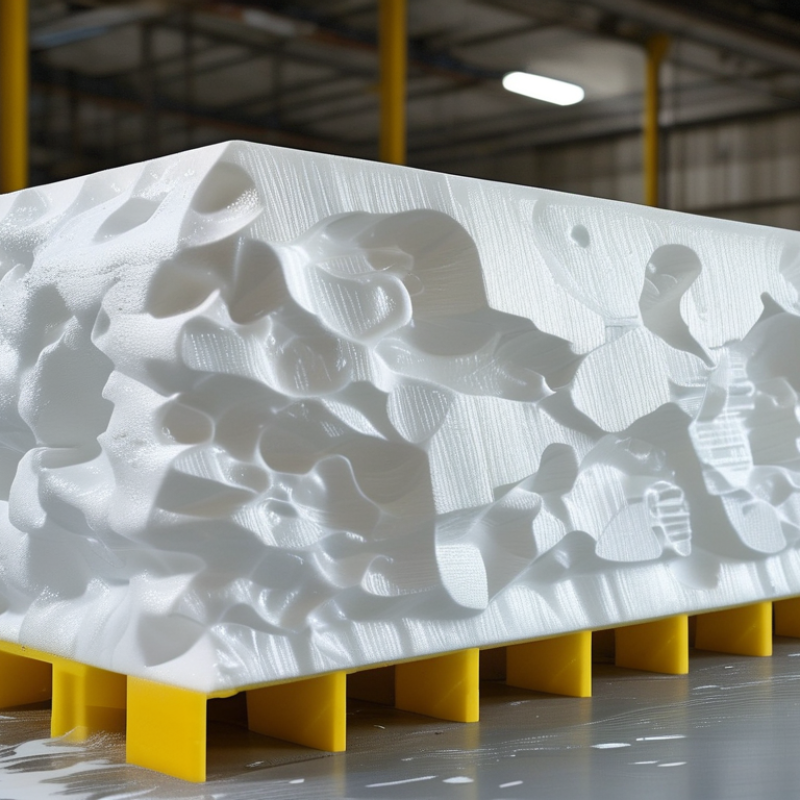
Set a thermal target before comparing polyol systems. For many rigid PU insulation projects, aim for 0.020–0.028 W/m·K at a density of 30–45 kg/m³. This range requires more than a low-density foam. Cell size, closed-cell content, blowing-agent efficiency, and moisture control all influence the final result. Density alone can mislead.
Choose a polyol that supports stable processing at your target density. Check its viscosity, cream time, rise profile, and compatibility with the isocyanate component. A suitable formulation should create fine, uniform cells and resist shrinkage after demoulding. Higher crosslink density may improve dimensional stability, but it can also increase brittleness. That trade-off deserves testing.
Keep production conditions realistic. Small laboratory panels may achieve 0.020 W/m·K, while factory parts perform differently after aging. Measure thermal conductivity after controlled conditioning, preferably with a recognized test method. Record density, specimen direction, temperature, and curing time. Do not trust one excellent result. It may hide uneven cells or surface effects.
A practical trial should include several polyol candidates across the 30–45 kg/m³ range. Compare thermal conductivity, flow, adhesion, compressive strength, and dimensional change. Weaker results are useful. They show where the formulation needs adjustment, rather than proving the polyol is unsuitable. avazi
Match Polyol Functionality: 300–500 mg KOH/g OH Number
How to Choose Polyol for PU Insulation?
For rigid PU insulation, polyol selection starts with hydroxyl number and functionality. A practical working range is 300–500 mg KOH/g. This range often supports enough crosslinking for firm foam and stable insulation panels.
Higher hydroxyl numbers usually increase crosslink density. The foam may become harder and more dimensionally stable. However, excessive reactivity can shorten cream time and create poor mold filling. It may also increase brittleness. Lower values can improve flexibility, but the foam may lose compressive strength or dimensional stability.
Do not treat OH number as functionality. They are related, but not identical. Functionality describes the average number of reactive hydroxyl groups per molecule. OH number reflects hydroxyl concentration by weight. Check both values before adjusting the formulation. In production trials, I compare viscosity, cream time, cell structure, density, and compression strength. Small changes matter.
Measure carefully.
A common mistake is choosing a polyol only from its OH number. Water content, viscosity, acid value, and molecular structure can change processing behavior. A 400 mg KOH/g polyol may perform differently from another polyol with the same stated value. Review the technical data, confirm the test method, and run a controlled cup test before scaling up. I have seen promising laboratory foam fail during panel production because the blend filled the mold too slowly. The number looked right. The process did not.
How to Choose Polyol for PU Insulation?
Match polyol functionality with the hydroxyl number. Rigid PU and PIR insulation commonly use polyols in the 300–500 mg KOH/g OH-number range, with functionality typically increasing as greater crosslink density and dimensional stability are required.
The bars show representative OH-number selection ranges; the line shows typical nominal functionality. Actual targets depend on blowing agent, isocyanate index, density, processing method, and required thermal performance.
Control the Isocyanate Index Within the 100–120 Range
How to Choose Polyol for PU Insulation?
Choosing a polyol for PU insulation starts with the target isocyanate index. This index compares actual NCO groups with the theoretical amount required for the formulation. In practice, keeping it between 100 and 120 offers a useful balance between curing, strength, and dimensional stability. An index near 100 can support efficient processing, but it may leave less tolerance for moisture or dosing variation. Higher values can improve rigidity, yet excessive isocyanate may increase brittleness, heat release, and material cost.
Match the polyol’s hydroxyl value and functionality with the foam’s application. A rigid insulation system often needs enough functionality to build a stable cell structure. However, a very reactive polyol can shorten mixing time and create uneven expansion. Check the water level, physical blowing agent, catalyst package, and foam density together. Changing one component can shift the final index and cell size. I have found that small weighing errors become visible as soft edges or surface cracks. That result is easy to overlook.
Tips: Calculate the index from measured raw-material data, not supplier estimates alone. Run small test panels at 100, 110, and 120. Record cream time, core density, adhesion, and dimensional change after heating. Keep the best result, not simply the highest compressive strength. Also, review the formulation after storage, because polyol temperature and moisture can quietly affect repeatability.
Choose Blowing Agents with Low GWP and ≥90% Closed Cells
How to Choose Polyol for PU Insulation?
Choose Blowing Agents with Low GWP and ≥90% Closed Cells
When selecting a polyol system for polyurethane insulation, evaluate its blowing agent, not only its viscosity or price. A low-GWP blowing agent can reduce climate impact and support evolving environmental requirements. However, low GWP alone does not guarantee strong insulation performance. The polyol, catalyst, surfactant, water level, and blowing agent must work together. In practical trials, check cream time, rise profile, density, dimensional stability, adhesion, and thermal conductivity. Small processing changes can significantly alter cell structure.
Tips: Request test data for closed-cell content using a recognized method, such as ISO 4590 or ASTM D2856. Aim for at least 90% closed cells. Ask when the thermal conductivity was measured. Fresh foam may show different results after aging. Also review the blowing agent’s GWP, handling requirements, and compatibility with the production equipment. Do not accept a general claim without test conditions.
During scale-up, monitor foam temperature and mixing quality at several points. Poor dispersion may create large cells, surface defects, or uneven density. A formulation that works in a laboratory cup can behave differently in a continuous panel line. That gap is easy to underestimate. I have found that slower adjustments often produce more reliable results. Still, every project needs confirmation through actual samples and repeat testing. The ≥90% closed-cell target should be verified after processing, not assumed from the formulation sheet.