
-
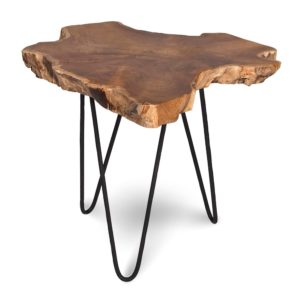
Style In Form Nesting Table Hairpin
Original price was: $429.00.$349.00Current price is: $349.00. -
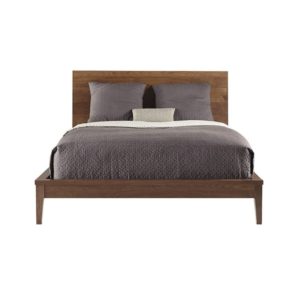
West Bros Serra King Walnut Bed
Original price was: $3,499.00.$2,799.00Current price is: $2,799.00. -
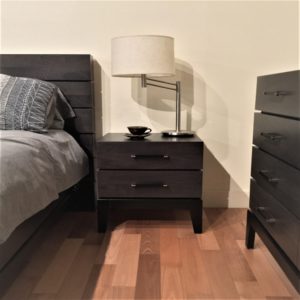
TH Definity Walnut Night Table
Original price was: $1,499.00.$1,199.00Current price is: $1,199.00. -
Ren-Wil Tupper Picture
Original price was: $549.00.$399.00Current price is: $399.00. -
Renwil Amika Clock
Original price was: $619.00.$489.00Current price is: $489.00. -
Torre & Tagus Flame Sculpture
Original price was: $159.00.$119.00Current price is: $119.00. -
Citak 5X8 Rug Arctic Thatch
Original price was: $599.00.$449.00Current price is: $449.00.

How to Find the Best Furniture Suppliers in 2026?
Finding the Best Furniture suppliers in 2026 requires more than comparing online prices. Reliable sourcing begins with clear product requirements, verified factory information, and practical quality checks. Buyers should examine wood species, frame construction, upholstery density, hardware, packaging, and repair support. A polished catalog can hide weak production standards.
Ray Eames, a respected furniture designer, once said, “The role of the designer is that of a very good, thoughtful host anticipating the needs of his guests.” Her insight applies to supplier selection. The best supplier anticipates problems before they reach your warehouse. Ask for material samples, production photographs, inspection records, and realistic delivery schedules. Request a sample chair or table when possible. Touch reveals details that photographs often miss.
Strong suppliers also explain minimum order quantities, customization limits, payment terms, certifications, and after-sales procedures. Check whether their claims remain consistent across emails, factory visits, and independent references. A supplier who answers slowly may still produce excellent furniture, while a fast salesperson may overpromise. This is where judgment matters.
No supplier is perfect. Even experienced buyers can overlook weak packaging or seasonal delays. I would not treat a low quote as a victory until the full landed cost is clear. Freight, storage, defects, and replacement parts can change the decision. This guide will help businesses compare suppliers carefully, reduce avoidable risks, and choose Best Furniture partners that support quality, transparency, and long-term growth.

Define Your Furniture Sourcing Needs and Supplier Criteria
In 2026, furniture sourcing becomes easier when the brief is specific. Write down the product type, target customer, dimensions, materials, finish, quantity, and expected retail price. Add practical details, such as carton size, assembly method, packaging level, and delivery destination. These points shape the supplier search. Vague requests create vague quotations. Details prevent expensive surprises.
Supplier criteria should match the risks of your furniture project. For solid wood pieces, ask about moisture control, timber origin, joinery, and surface testing. For upholstered items, check fabric composition, foam density, stitching quality, and fire-safety documentation where required. Request recent production photos and a physical sample before discussing large orders. Compare sample accuracy, response speed, minimum order quantity, lead time, payment terms, and replacement procedures. Do not judge quality from polished photos alone. A clean image proves little.
In my sourcing work, the first sample often exposes hidden costs. A thicker board may improve durability but increase freight volume. Better packaging can reduce damage, yet it may raise material use. Ask suppliers to explain these trade-offs in writing. Reliable partners provide consistent measurements, clear inspection records, and realistic delivery dates. Verify capacity through a small trial order, not promises. I once accepted a low quote too quickly. The final rework cost more than the apparent saving. That mistake still influences my checklist.
How to Find the Best Furniture Suppliers in 2026?
Define Your Furniture Sourcing Needs and Supplier Criteria
| Evaluation Dimension | Weight | Recommended Supplier Benchmark | Evidence to Request | Scoring Method | Warning Signal |
|---|---|---|---|---|---|
| Product Fit and Design Capability | 20% | Can manufacture the required furniture type, dimensions, materials, finishes, packaging format, and customization level. | Technical drawings, material samples, finish samples, product catalogue, and a pre-production sample. | Score 5 if all specifications are met without major modification; score 1 if capabilities are unverified. | Generic samples, unclear specifications, or reluctance to produce a paid prototype. |
| Quality Management | 20% | Uses documented quality-control procedures, approved samples, inspection records, and corrective-action processes. | Quality manual, inspection checklist, defect classification, test reports, and recent inspection records. | Score 5 when quality checkpoints exist from incoming materials through final packing. | Quality is checked only at the end of production or defects are handled without written corrective action. |
| Product Safety and Regulatory Compliance | 15% | Can meet the safety, chemical, labeling, flammability, and documentation requirements of the destination market. | Applicable test reports, material declarations, traceability records, safety data sheets, and labeling samples. | Score 5 when documentation matches the exact product, material, and destination market. | Expired reports, documents for different products, or refusal to disclose material information. |
| Production Capacity and Scalability | 10% | Has sufficient equipment, labor, material access, and backup capacity for both trial orders and peak demand. | Monthly capacity range, current utilization, production schedule, equipment list, and peak-season plan. | Score 5 when planned demand uses no more than approximately 70–80% of verified capacity. | Capacity claims cannot be supported or production depends on unidentified subcontractors. |
| Total Cost and Commercial Terms | 10% | Provides a transparent quotation covering product cost, tooling, packaging, testing, payment terms, and applicable logistics terms. | Itemized quotation, payment schedule, tooling ownership terms, packaging costs, and cost-validity period. | Compare total landed cost rather than unit price alone; award the highest score to the best verified value. | Unusually low pricing, hidden fees, frequent unexplained revisions, or unclear payment conditions. |
| Lead Time and Delivery Reliability | 10% | Offers a defined timeline for sampling, production, inspection, packing, and dispatch, with proactive delay communication. | Sample schedule, production lead time, historical on-time delivery data, and contingency plan. | Score based on documented on-time delivery performance and the accuracy of committed dates. | Dates are given without production milestones or delays are communicated only after the deadline. |
| Minimum Order Quantity and Flexibility | 5% | MOQ, mixed-SKU rules, replenishment options, and customization limits are compatible with the purchasing plan. | MOQ list, mixed-container or mixed-SKU policy, sample-order terms, and reorder conditions. | Score 5 when the supplier supports the required launch quantity and a practical replenishment model. | MOQ is materially higher than forecast demand or small changes trigger excessive fees. |
| Sustainability and Material Traceability | 5% | Can identify key material sources and provide credible information on responsible materials, waste, energy, and packaging. | Material-origin records, recycled-content evidence where applicable, packaging specifications, and environmental policies. | Score 5 when claims are product-specific, documented, and traceable to a recognized verification process. | Broad environmental claims without supporting records or inconsistent material descriptions. |
| Communication and Project Management | 5% | Responds clearly, maintains version-controlled specifications, assigns a responsible contact, and records decisions. | Response-time expectations, contact structure, meeting notes, technical-question log, and change-control process. | Score 5 when answers are complete, consistent, and delivered within the agreed working timeframe. | Conflicting information, slow responses, undocumented changes, or unclear responsibility. |
| Recommended Decision Rule | 100% | Shortlist suppliers scoring at least 75/100, require corrective action for any critical compliance gap, and validate the final choice with a production sample and pre-shipment inspection. | |||
Related Posts
-

Top 10 Quality Furniture Suppliers for Global Buyers
-

7 Best Inside Furniture Suppliers for Global Buyers
-

Why Choosing the Right Family Furniture is Essential for a Cozy Home
-

Why Is Inside Furniture Important for Global Buyers?
-

How to Choose the Top Furniture for Your Home Style?
-

How to Choose Value Furniture for Your Global Sourcing Needs?