How to Choose Aluminum Profile for Pergola?
Choosing an Aluminum Profile For Pergola is not simply a matter of selecting the thickest section. The right profile must balance strength, weight, drainage, appearance, and installation practicality. A pergola beside the sea faces salt air, strong wind, and frequent moisture. A backyard structure may face different pressures, including snow, climbing plants, and repeated use.
Pergola designer and aluminum systems consultant Mark Leary advises, “Choose the profile for the load, climate, and people—not for appearance alone.” This principle keeps the decision practical. It also prevents a common mistake: treating attractive dimensions as proof of engineering quality. A slim profile can look elegant, yet it may deflect under heavy loads. A very large profile can feel unnecessarily industrial.
Start with the project’s span, roof type, local wind exposure, and expected drainage needs. Check the alloy, wall thickness, temper, and available connection method. Powder coating matters too. A high-quality finish should resist fading, peeling, and surface corrosion when properly maintained. Ask for technical data, load tables, and installation guidance from the supplier.
Do not ignore the joints. Weak brackets can undermine strong profiles. Poorly planned channels may trap water inside the frame. Small details matter.
Experience also reveals an uncomfortable truth: the cheapest option can become expensive after movement, staining, or difficult repairs appear. Still, overengineering every residential pergola is not wise. The best Aluminum Profile For Pergola matches real conditions, verified calculations, and the owner’s maintenance expectations. There is no universal “best” section. There is only the most defensible choice for one specific site.
Define the Structural Requirements of the Pergola
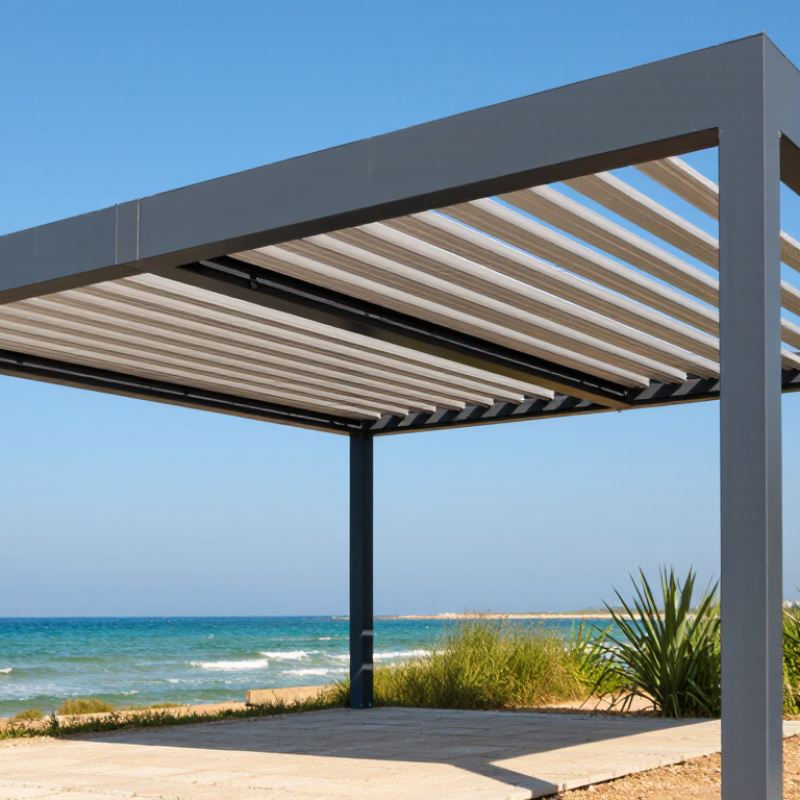
Before choosing an aluminum profile, define the pergola’s structural demands. Record its span, post spacing, roof weight, drainage details, and attachment points. A 4-meter beam may need a deeper section than expected. Aluminum weighs about 2,700 kg/m³, according to engineering data used in the Aluminum Design Manual. Its low weight helps installation, but slender profiles can deflect noticeably.
Wind usually controls outdoor pergola design. ASCE 7-22 uses three-second gust wind speeds for structural calculations. At 40 m/s, the basic velocity pressure is approximately 981 N/m² before exposure and shape factors. This pressure can create uplift at roof edges and bending in corner posts. Engineers should check local wind maps, snow loads, seismic conditions, and the foundation connection. Coastal sites also require careful attention to corrosion and fastener compatibility.
Profile selection should follow calculated bending, shear, buckling, and serviceability limits. A strong-looking section may still feel flexible under rain or wind. In practice, I would check beam deflection, not only ultimate strength. A preliminary calculation can miss torsion from uneven roof panels. That is a useful warning. Ask a qualified structural engineer to verify the final section, wall thickness, anchors, and drainage before fabrication.
How to Choose Aluminum Profile for Pergola?
Define the Structural Requirements of the Pergola
Preliminary profile selection should begin with the loads acting on the pergola. The chart compares representative load levels in kPa for common design checks: self-weight, snow, wind uplift, and maintenance loading. Higher loads or longer spans generally require profiles with greater section depth, wall thickness, and bending resistance. Actual values must be verified against local building codes, site exposure, span length, connection details, and the selected roof material.
Reference unit: 1 kPa = 1 kN/m². The values shown are preliminary screening values and are not a substitute for structural engineering calculations.
Select the Appropriate Profile Size and Wall Thickness
Choosing an Aluminum Pergola Profile starts with span, load, and connection details, not appearance. A 100 mm post may look substantial, yet it can twist under wind if the wall is too thin. ASCE/SEI 7-22 requires site-specific wind evaluation, including exposure, height, and local wind speed. Therefore, a coastal roof needs a different section from a sheltered garden structure. Measure the clear span and tributary roof area before selecting the profile.
Wall thickness controls local buckling, screw engagement, and resistance around brackets. The Aluminum Association’s Aluminum Standards & Data 2023 lists aluminum’s elastic modulus near 69 GPa, so aluminum deflects more than steel at the same geometry. Alloy strength also matters. Typical 6063-T6 data show a lower yield strength than 6061-T6, although actual values depend on the supplier and temper. A larger hollow section often improves stiffness more efficiently than simply adding thickness. A 150 × 100 mm beam with a 3 mm wall may outperform a 100 × 100 mm beam with a 4 mm wall, but only after calculation.
Keep unsupported roof beams short where possible. Check both bending stress and visible sag. Many designers use serviceability limits near span/240 or span/360, but the governing code and project brief should control. Do not trust a catalog load table blindly. I have seen profiles pass a simple weight check, then fail at the corner connection. Engineer-reviewed calculations should verify wind uplift, drainage weight, fasteners, and deflection. The first estimate is rarely perfect.
Evaluate Load Capacity, Climate Resistance, and Durability
How to Choose Aluminum Profile for Pergola?
Evaluate Load Capacity, Climate Resistance, and Durability
A pergola profile must resist wind uplift, snow, and its own weight. ASCE 7-22 requires site-specific design loads, including wind speed, exposure, and roof geometry. Do not select sections by appearance alone. A thicker wall is not automatically safer. Engineers should check span, deflection, section modulus, and connection strength. A practical installation also needs reinforced brackets and properly anchored posts.
Climate exposure changes the decision. The World Meteorological Organization reported that 2023 was about 1.45°C above the pre-industrial average. Stronger heat cycles can increase material movement and sealant stress. NOAA recorded 28 separate billion-dollar weather disasters in the United States during 2023. These figures support conservative design for gusts, heavy rain, and sudden temperature changes. Coastal projects need extra attention because salt accelerates surface corrosion.
Drainage matters.
Use profiles with internal channels, sloped edges, and clear weep paths. Isolate aluminum from copper, carbon steel, and treated timber to reduce galvanic corrosion. Powder-coated finishes can improve appearance and weather resistance, but damaged areas still need inspection. The Aluminum Association notes that alloy temper and fabrication strongly affect structural performance. This is often overlooked. Review fasteners, weld zones, cut ends, and water traps every year. A profile that performs well in a dry sample test may fail earlier when joints retain moisture.
Verify Installation Compatibility, Safety, and Maintenance Needs
When choosing an aluminum profile for a pergola, installation compatibility should guide the decision. The right profile must match the roof panels, connectors, posts, and available tools. Start by measuring the span, fixing points, and drainage direction. A profile that looks strong may still fail if its wall thickness does not suit the load.
Check the supplier’s technical data for load capacity, deflection, alloy grade, and surface treatment. Ask a qualified structural professional to review wind, snow, and anchoring conditions. Local building requirements may also affect dimensions and foundation details. Do not rely on appearance alone. During one site inspection, I found that a narrow beam fitted the drawings but could not accept the planned fasteners. That mistake required a costly adjustment.
Safety also depends on precise installation. Use corrosion-resistant fasteners that suit aluminum and the supporting material. Keep electrical fixtures away from water paths. Provide expansion gaps where temperature changes are significant. Water needs an exit route. Otherwise, moisture can collect inside joints and damage nearby surfaces.
Maintenance should remain practical. Choose profiles with accessible drainage channels and replaceable seals. Inspect joints, fasteners, coating damage, and blocked outlets twice a year. Rinse dust and salt deposits with clean water, then dry the surfaces. Avoid harsh cleaners. Small issues grow quickly. Recheck the structure after severe weather, even when nothing looks wrong.