7 Tips for Choosing the Best Pool Leaf Vacuum
Choosing the right Pool Leaf Vacuum can change a frustrating cleaning routine into a manageable weekly task. Leaves, pine needles, and fine debris often collect around steps, corners, and skimmer baskets. A weak vacuum may scatter that material instead of removing it. The best choice depends on your pool’s surface, size, water depth, and surrounding landscape.
Pool-care educator and author Rudy Stankowitz offers a practical principle: “The right equipment should make maintenance simpler, not more complicated.” That idea guides this article. We will examine suction strength, debris capacity, maneuverability, filtration, battery life, durability, and total value. Each feature matters differently. A small above-ground pool does not need the same tool as a deep, tree-lined pool.
Real-world details matter. A vacuum that feels light in a showroom may become awkward when its collection bag is full. Fine sand can also expose weak filters quickly. Some models perform well with dry leaves but struggle with wet, compacted debris. That is easy to overlook. I have also found that convenience claims deserve careful testing, because “quick cleanup” can still require repeated emptying.
These seven tips will help you compare products with clearer expectations. They will not promise a perfect purchase. No Pool Leaf Vacuum fits every pool. However, careful evaluation can reduce wasted effort, protect equipment, and leave the water visibly cleaner.
Understanding Pool Leaf Vacuum Types and Their Cleaning Methods
Understanding Pool Leaf Vacuum Types and Their Cleaning Methods
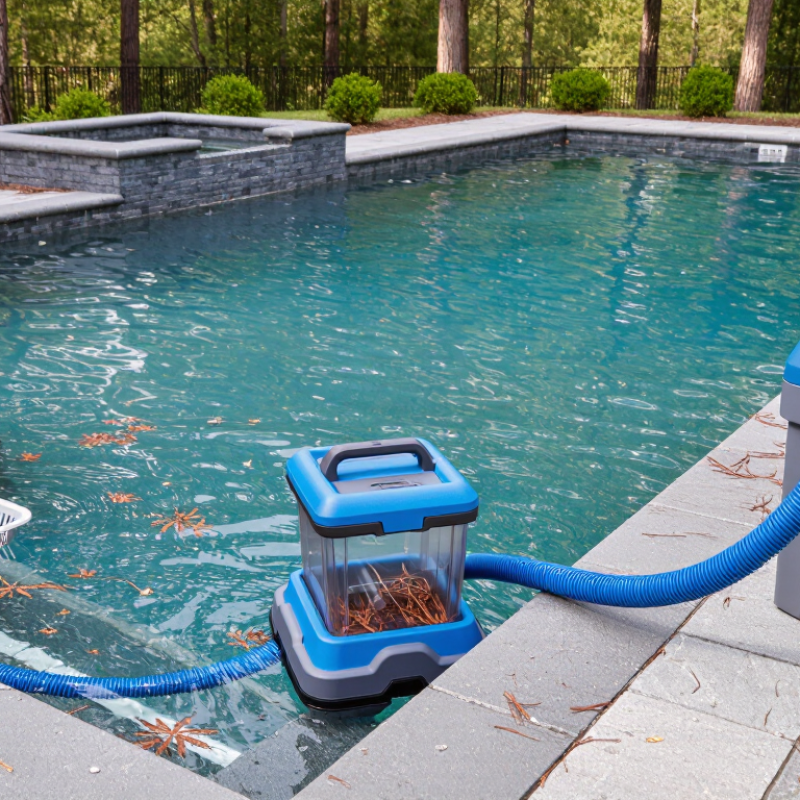
Choosing a pool leaf vacuum starts with understanding how each type moves debris. A manual suction vacuum connects to the filtration system and removes leaves through the pool hose. It offers strong control, but the filter may clog quickly. A battery-powered handheld vacuum collects debris in an attached chamber. It works well for steps, corners, and small pools. A pressure-powered cleaner pushes water through a separate bag, reducing strain on the main filter.
In my experience, wet leaves need slower passes. They often cling to the pool floor.
Tip 1: Match the vacuum to your pool size and leaf volume.
Tip 2: Check whether debris enters a bag or the filter.
Tip 3: Choose wheels with enough grip for textured surfaces.
Tip 4: Measure the hose before buying. A short hose wastes time.
Tip 5: Select a washable collection bag for frequent cleaning.
Tip 6: Check battery life if the vacuum is cordless.
Tip 7: Read maintenance instructions before judging performance.
Simple care matters.
Use a leaf net first when branches cover the water. This prevents unnecessary filter loading. Then vacuum slowly, keeping the head flat against the floor. Empty the bag before it becomes heavy. A packed bag can reduce suction and make steering awkward.
I once assumed stronger suction was always better, but it lifted fine debris into the water. That was a useful mistake.
Gentle, repeated passes may produce clearer water and less equipment stress.
Assessing Pool Size, Debris Levels, and Cleaning Requirements
Choosing the best pool leaf vacuum starts with the pool itself, not the equipment aisle. Measure surface area, depth, steps, and narrow corners before comparing suction, capacity, or battery life. A small plunge pool may need a compact manual vacuum, while a large pool demands longer reach and fewer interruptions. Those details matter. In my maintenance work, I have seen owners overbuy powerful units that were awkward around steps. That was an expensive lesson.
Tip 1 Match capacity to debris. After windy days, a pool beneath mature trees can collect wet leaves, seed pods, and fine grit within hours. Choose a larger debris chamber for heavy loads, but check its lifting weight when full. A vacuum that feels manageable empty may become tiring underwater.
Tip 2 Inspect your cleaning pattern. If debris gathers near the deep end, prioritize hose length, balanced handling, and reliable movement across slopes. For occasional skimming, a simple tool may be enough. Daily cleaning needs stronger durability and easy rinsing.
Tip 3 Match the vacuum to your routine. Consider whether you remove leaves before swimming, after storms, or during weekly maintenance. Look for controls you can operate with wet hands and filters that open without scattered debris. Fine particles may require a separate filtration step; leaf vacuums are not always designed for silt. Read capacity claims carefully. Real conditions vary. Water temperature, leaf moisture, and your own reach can change performance more than advertised figures. Test the weight, turning radius, and emptying process if possible. Small inconveniences become obvious by the third cleaning.
Comparing Suction Power, Filtration, and Debris Collection Capacity
7 Tips for Choosing the Best Pool Leaf Vacuum
Suction power is not the whole story. Compare water flow under load, not only the advertised maximum vacuum. A long hose, a half-full debris bag, and a clogged screen can reduce performance quickly. The CDC’s 2023 Model Aquatic Health Code commonly uses a six-hour turnover benchmark for many public pools. Your vacuum will not replace that circulation system, but its flow should support efficient cleaning without starving the pump. Test it with the actual hose length. I once trusted a high-pressure rating and ignored weak pickup at the pool floor. That assumption was wrong.
Filtration decides what returns to the water. Industry guidance commonly places sand filtration around 20–40 microns, cartridge filtration near 10–15 microns, and diatomaceous earth systems around 2–5 microns. Smaller particles require finer media, but finer media may load faster. PHTA operating guidance emphasizes maintaining design flow and inspecting filters before performance drops. Debris capacity also matters. A practical field check is simple: collect wet leaves, seed pods, and grit until the container reaches its usable limit. Larger capacity means fewer interruptions, yet an oversized container can make the vacuum awkward to lift. Choose a transparent canister when possible. You can see the blockage early. Read NSF/ANSI 50 compliance information for relevant circulation components, but do not treat certification as proof of perfect cleaning. Real pool conditions remain messier.
Evaluating Durability, Safety Features, and Overall Value
Choosing the best pool leaf vacuum requires more than comparing suction numbers. Durability begins with the housing, wheels, seals, and debris bag. Look for corrosion-resistant materials and a replaceable filter or bag. A vacuum that survives dropped tools and wet storage offers better value. I would test the handle grip with wet hands. Small details matter.
Safety deserves equal attention. The U.S. Consumer Product Safety Commission reported an annual average of about 6,300 nonfatal drowning injuries involving children under 15 from 2018 through 2020. A leaf vacuum cannot prevent drowning, but safer operation still matters. Choose models with low-voltage operation, protected charging ports, automatic shutoff, and clear battery indicators. Follow the pool manufacturer’s electrical guidance and relevant PHTA safety practices. Keep cords, chargers, and loose cables away from standing water.
Overall value depends on service life, not the lowest price. Compare runtime, charging time, replacement-part availability, warranty coverage, and cleaning capacity. ENERGY STAR guidance shows that efficient pool equipment can substantially reduce operating energy, although a leaf vacuum uses less power than a circulation pump. Runtime claims remain difficult to compare because debris depth and water temperature change performance. That is an imperfect test. Still, removing a full bag without touching wet leaves is a practical advantage. A modest vacuum with durable parts may outperform a powerful model that needs replacement after one season.
7 Tips for Choosing the Best Pool Leaf Vacuum
Recommended evaluation weights based on practical pool-cleaning priorities. Higher percentages indicate factors that typically have a greater effect on long-term satisfaction, safety, and value.
Prioritize collection performance and durable construction, then verify safety features, ease of maintenance, maneuverability, debris handling, and total ownership cost before purchasing.